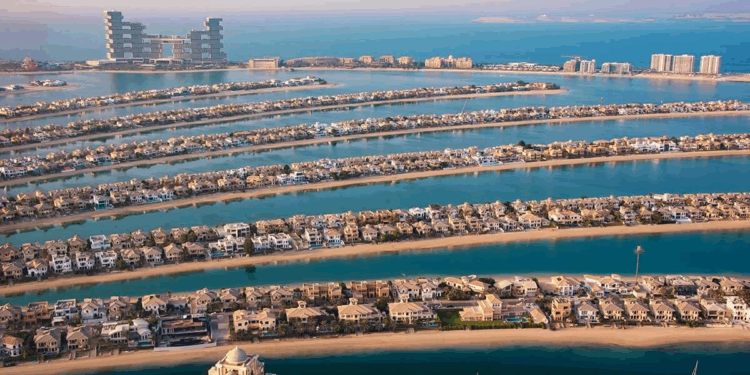






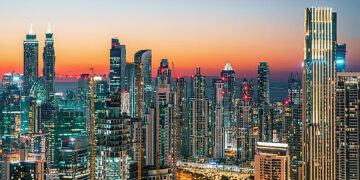

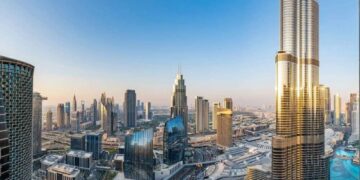
























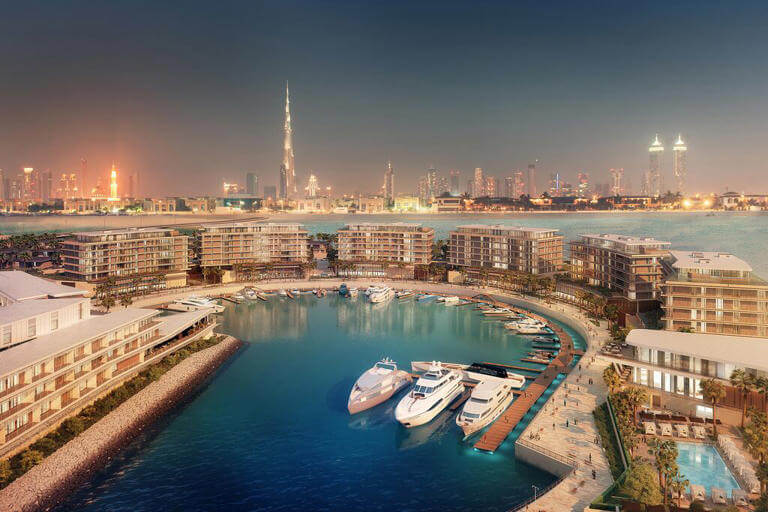
According to a recent research, the value of sales of residences valued at more than $10 million increased by 54% yearly in the third quarter, indicating that Dubai luxury property prices will continue to rise next year due to increased demand.
Prime home prices are set to increase 3 per cent next year, “underpinned by continued robust international HNWI [high net-worth individuals] demand for premium homes, the continued inflows of global wealth (and the global wealthy) and a deepening pool of resident investors”, consultancy Knight Frank said in its latest quarterly review of Dubai’s property market on Monday.
With 103 transactions in the third quarter, up 24% yearly, Dubai continued to be the “world’s busiest $10 million + market.”
According to the research, the emirate also saw 17 transactions for properties valued at more than $25 million over the course of the three months, which is more than twice as many as it did a year prior.
In the three months leading up to the end of September, the total transaction value exceeded $2 billion, representing a 54% yearly increase. The average value of ultra-luxury properties was $19.4 million.
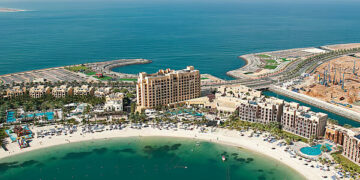
The most expensive home at the time was a seven-bedroom mansion in Asora Bay by Meraas in the La Mer neighborhood, which sold for Dh350 million ($95.3 million).
The quarterly data is a “stark indication of how fast prices are rising in this exclusive segment of the market”, said Will McKintosh, Knight Frank Middle East’s regional partner for residential sales UAE.
“Dubai’s luxury market has cemented its status as a safe haven for international and local luxury buyers and it looks set to be another record-breaking year for the $10 million+ homes market, following the 435 deals registered during 2024,” he added.
According to a survey by Henley & Partners and wealth intelligence firm New World Wealth, the UAE is predicted to pull a record 9,800 moving millionaires this year due to tax-free living and regulatory improvements. There were an estimated 20 billionaires and 81,200 millionaires in Dubai in 2024.
“High-net-worth individuals have firmly anchored demand for luxury and super-prime assets, while a maturing base of resident end users has provided stability across the mainstream sector,” Mr McKintosh said.
Changing pace
According to Knight Frank, average values in Dubai’s residential real estate market increased by 2.5% in the third quarter, continuing a “unbroken run” of quarterly increases that started in late 2020. Compared to this time last year, values had increased by 10%.
The total for the first nine months has increased to more than 148,000 sales valued at Dh401.7 billion ($109.3) thanks to the third-quarter figure of 56,854 property sales valued at Dh117 billion.
“This extraordinary level of activity underscores Dubai’s growing appeal among both domestic and international investors and purchasers,” said Faisal Durrani, partner and head of research for the Mena region at Knight Frank.
However, as with any cycle, “we are starting to see a slowing in the rate of quarterly rises”.
According to Knight Frank data, quarterly increases averaged 2.02 percent in 2021, 2.22 percent in 2022, 4.34 percent in 2023 and 2024, and decreased to 3.2 percent between the first and third quarters of this year.
Government initiatives including the extension of the 10-year golden visa program, residency permits for retired and remote workers, and general economic growth in the UAE due to diversification efforts have all benefited Dubai’s real estate market.
The government introduced a new program in July to assist UAE citizens and Emiratis who do not own any freehold residential property in the emirate in moving up the real estate ladder.
Looking ahead, “although the rate of house price growth may be demonstrating signs of slowing, crucially it remains positive”, said Mr Durrani.
“The growth in the mainstream market is likely to average around 1 per cent by the time we get to the end of December 2026.”